Are you, like me, keeping a close eye on the evolving landscape of inherited blood disorders? Specifically, I'm talking about Hereditary Spherocytosis (HS). It's a condition that demands our attention, and 2025 is shaping up to be a pivotal year. Let's dive into the emerging diagnostic and treatment strategies. We'll explore the genetic insights that are driving innovation.
The Hereditary Spherocytosis Market was valued at USD 1.53 billion in 2024 and is expected to grow to USD 3.11 billion by 2034, at a CAGR of 7.32%. Increased genetic testing and awareness about rare blood disorders are propelling market growth.
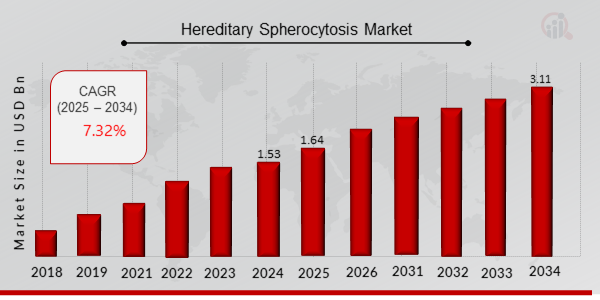
Advanced Diagnostic Strategies: Beyond the Basics
Traditional methods are evolving. We are seeing new techniques. These aim for earlier, more precise diagnoses. Think of it. Genetic testing is becoming more accessible. It's providing deeper insights into HS subtypes. This allows for personalized treatment plans. We're seeing less invasive methods too. They improve patient comfort and care.
- Flow cytometry is becoming more refined.
- Next-generation sequencing is revealing novel mutations.
- Imaging techniques are enhancing spleen assessment.
- These tools lead to more accurate assessments.
- Early detection improves long-term outcomes.
Genetic Insights: Unlocking the Mysteries of HS
Genetic research is accelerating. We are understanding the complexities of HS better. This means we can target therapies more effectively. New gene editing technologies are showing promise. They could potentially correct the underlying genetic defects. This is a huge leap forward in patient care.
Emerging Treatment Options: A Shift in Approach
Treatment is shifting from symptom management. We are seeing a move towards disease modification. New pharmacological agents are being developed. These target specific pathways involved in HS. This means fewer complications and improved quality of life. We must also consider the role of AI.
AI and Clinical Applications: Revolutionizing Patient Care
Artificial intelligence is transforming healthcare. It's helping us analyze complex genetic data. AI is aiding in predicting disease progression. This supports the development of personalized therapies. AI is also used to optimize treatment protocols. It improves patient outcomes and reduces costs.
Future Therapies: A Glimpse into Tomorrow
What does the future hold for HS? Gene therapy is a major area of focus. We are also seeing advancements in stem cell transplantation. These could offer curative options for patients. We must stay updated on these developments. It’s critical to consider the regulatory changes that impact these new therapies.
Comparing Current and Future Treatment Modalities
| Treatment Modality | Current Practice | Future Potential |
|---|---|---|
| Splenectomy | Standard procedure for severe cases | Less frequent, replaced by targeted therapies |
| Blood Transfusions | Supportive care for anemia | Reduced need with gene editing |
| Folic Acid Supplementation | Essential for red blood cell production | Continued importance, enhanced by personalized nutrition |
| Gene Therapy | Not widely available | Potential curative option, personalized gene editing |
| Pharmacological Agents | Limited targeted options | Targeted drugs, reducing hemolysis and improving RBC stability |
Regulatory Changes and Sustainability: Shaping the Future
Regulatory bodies are adapting to these innovations. They are streamlining approval processes for new therapies. This ensures patient access to cutting-edge treatments. Sustainability is also a key consideration. We are seeing a focus on eco-friendly manufacturing. This reduces the environmental impact of healthcare.
New Hope for Inherited Blood Disorders: A Collaborative Effort
The future of HS is bright. We are seeing a collaborative effort across disciplines. Researchers, clinicians, and industry are working together. This is to develop better diagnostic and treatment strategies. We must prioritize patient-centric care. We need to stay informed on the latest advancements.
In conclusion, the landscape of Hereditary Spherocytosis is rapidly evolving. We are witnessing significant advancements in diagnostics, genetics, and treatment. These developments provide new hope for patients. It is crucial to stay updated on these innovations. By embracing these changes, we can improve the lives of those affected by HS. We must work together to ensure these advancements reach patients.
Related Trending Reports for You-
Pharmaceutical Granulation Equipment Market
Comments
Post a Comment